Showing posts with label ESOL. Show all posts

Tuesday, December 30, 2014

Reading Resources for Parents - Translations Included

I'll try to keep this one short and sweet. I have already posted this to Facebook, but I thought it was important enough to share here. One of our evaluation standards is communication with parents. Here is an easy link to very imformative materials (complete with some Spanish translations) that provides parents with information about reading. Some examples are facts for parents, why read aloud is important, how much literacy is lost with too much TV time, and how parents can help. The posters and brochures are available for free download and great to have on hand for parent/teacher conferences or just as a refresher! I want my students to enjoy reading and have access to books, either English or Spanish. I'm happy as long as they learn to enjoy literature of any kind. The first line of defense is having the parents on board. Believe it or not, especially parents of English Language Learners, they really want to help, but are sometimes just not sure what they can do. Help them help you. You can find a list of various brochures and resources listed on this page. Spanish translated materials are designated in parentheses. Click on the image to access Jim Trelease's page. It is chocked full of reading resources. Like any caring educator, his goal is provide students with a positive experience with reading and a love of books. Remember, have these printed and on the ready. You never know when they'll come in handy. If you're in a TKES district, it will even earn you some brownie points!


Tuesday, November 04, 2014

ESOL Support Presentation

I am currently putting together a Powerpoint presentation, worried about how brutal it will feel for my attendees. Hasn't the word Powerpoint sort of become a word of dread? Luckily for those that see my presentations, they'll find that they are used more as a pacing tool, so that I hit my points, open discussion, and give everyone a copy to take with them as a reference.

I wasn't prepared to be so excited about putting this presentation together. The topic is English for Speakers of Other Languages (ESOL) and English Learners (EL) students and how to support them as a team, and my audience is our school's group of fresh-out-of-school teachers and teachers new to our district. Considering how I felt as a new teachers, I challenge myself further to think if I had started in my early 20s right out of college. What would really help me? While all the different resources and technical stuff would've been too overwhelming, I think learning to empathize with students would have been really helpful. Instead, I learned this more while working to get my ESOL accreditation from UGA. I have a strong belief that how you teach > what you teach. Relationships highly impact the return, especially with ESOL students. 

Obviously, I'm an advocate for our ELs, but I know their story, because it's like my mom's and my mom's students when she taught. She came from Vietnam at the age of 19 and became a teacher's aide in Mobile, AL at a time when the Asian immigrant population was much higher than the Hispanic immigration population. Even though she came at a fairly young age, she admits that her English was never as strong as she'd like. It was an embarrassment for her in certain situations, so I grew up helping her with her language and conversation while also learning "kitchen Vietnamese" myself. Who knows if either of us will be 100% in either language? I joke, but I love that I share two languages with my mom. It brought us closer as my dad became the outsider, only speaking one language.... English from the trailer parks of Mississippi. Was it English, or was it just Ed's language? I loved it, either way.

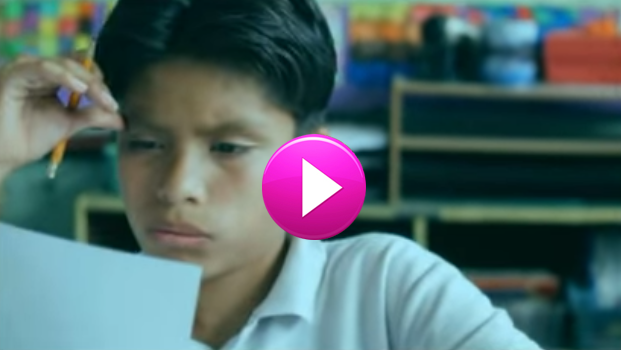
So back to my presentation. As I decide what points are most important amongst the many, I want to make sure that I give facts and stats, but that I'm also adding a partner activity as well as some videos. The first video is posted below. It really shows the struggle of an EL new to US schools. I'm also giving tons of resources. How fun is it that these new teachers will get a link to my Google Drive that has all of my TPT products saved to it?! I think that's cool! One of the coolest resources I found was a list of picture books and the skills they help teach. Wow!!! I love this list. I guess I'll be Amazon purchasing more books for my library. Click on the I Share, You Grab icon below. It's so extensive! I end the presentation with these notes about our ESOL students:

  • Developmentally, ELs are just a little behind their peers, especially the youngest students
  • Provide ELs time to practice language with their peers of all languages, socially and academically
  • Set high expectations
  • Allow ELs to collaborate and socialize with different groups
  • Allow processing time because it may not be that ELs can’t think, it may be because they’re thinking in two languages simultaneouslyWith your help, one day, they will be proficient in at least two languages“Kindness is a language that the deaf can hear and the blind can see.” –Mark Twain
 The film is called Immersion. The link takes you to video and the connected lesson plans.


Click on this link for the Mentor Picture Book list. Incredible resource! Before you leave, please tell me what would've helped you the most when learning to work with newcomers that didn't speak English. Leave some love in the comments.


Saturday, October 11, 2014

It's All About Character

I feel like I'm pulling out of a rut. I like this feeling in October. I'm so happy to report that a few mornings have been crisp, cool, and dry enough for straight hair. I mean, is there a better register indicating fall than frizz-free hair? It reminds me that the nights will be cooler, and the darkness will set in earlier, inspiring me to create new things for my students for the remainder of the year and the beginning of next year.


We are currently working on character traits and comparing and contrasting features in text in 5th grade ESOL reading. For scaffolding purposes, I thought that short passages would work best for the students, so I created this packet with short reading passages that introduce students to 10 different characters. The goal is to have students focus on character trait descriptions rather than appearance descriptions. Using character trait word banks (and for my entering and developing students a translation of character traits list), I have students read the short stories aloud and brainstorm as partners or a small group what character traits describe the character. Sometimes I add my input to model more challenging vocabulary. Answers must be based on characters interactions, feelings, and words.


Once we've read and written directly on the story with a Vis-a-Vis markers, which I've laminated for repeated use, I ask the students to come up with a way to sort the characters. They are in charge of coming up with their own way to sort - good/bad, boy/girl, young/old, etc. 
After the sorting exercise, each student draws two cards from the deck of character cards. On the constructed response sheet, the student lists the two characters they chose. They can either copy the character traits or try to come up with new ones. The question asked of them is "Would these two characters get along? Why or why not? Explain your answer and be sure to cite examples from the text." I preface their responses by leading them to think about how the characters would act if the two characters were in a new setting like a party or the store. 
I was amazed that my two students really grasped the concept and enjoyed thinking beyond the obvious when listing the character traits. For every character trait they chose, I would ask them to tell me why they chose it.

Enjoy the photos. I felt it was a triumphant lesson, and we had lots of fun. Even my student that NEVER speaks participated heavily today and even smiled a few times. Win!!!


If you like this lesson, please hop on over to Teachers Pay Teachers for the complete packet, including anchor charts, character stories and cards, and the constructed answer sheet. It's very easily adapted for all levels, especially with an adjusted amount of scaffolding. Your feedback is greatly appreciated.

Friday, October 10, 2014

Elements of a Story

Aw! My sweet second graders. These were my students for two whole weeks before our ESOL schedules messed up the entire school's schedule for about six weeks. I actually had some of these precious 2nd graders last year, so I was thrilled about the thought of looping with them and continuing to work on their strengths and their confidence in my room. I can't help but get a little emotional when I watch this little educational diddy we made in class. I called this class my bucket fillers because they had a way of making me smile every day.

In concert with the W questions of who, what, where, why, and hoW <--- See the W! I taught the kids this chant I found online that I thought would be very helpful. I love utilizing song and gestures to help the ELs with academic language. Elements of a story will continue to come up in their academic careers, so it was important for me to help them retain the story parts. I'm thrilled to report that they really GOT this song in just a couple of days and were so excited about making the video. Can I also add that days after watching the video with me, my husband has been going around singing, "the characters, the characters." Hilarious! It really has the ability to stick, which is exactly what we want for our students.

Enjoy!


Tuesday, September 23, 2014

R.A.C.E. to Respond

How about a little freebie to make up for my lack of blogging? R.A.C.E. to Respond was a concept introduced to us during a faculty meeting earlier this year. I love it! I like the fact that I can use it in my classroom, poster-sized and in a more manageable postcard size, for my kids to refer to when they answer. For my ESOL students, it's helpful to answer using the guidance of R.A.C.E.  My hope is this will give them a boost in rigor and in comprehension. Rush over to TPT and grab your very own R.A.C.E. to Respond poster. Leave some love while you're there. It's not been the easiest beginning of the year, and I can't wait for the mojo and creativity to make an explosive return.


Thursday, March 20, 2014

Tips for Teaching English Language Learners (ELLs)

Today, I found a great, to-the-point list in a blog article called, "Do's & Don'ts For Teaching English-Language Learners." It was written by an expert I've been following for quite some time, Larry Ferlazzo. While you read this list, keep in mind that all the dos and don'ts that are listed will just as well help your struggling native English speakers. Remember, sometimes the difference between an ELL and a native speaker is not all that much, especially in the early years.

Another Ferlazzo article is about the importance of having pictures handy when teaching ELLs. Today, I found a great site for free images. I went to morgueFILE and just browsed. I found great images that I wouldn't even have thought about searching for. NOw I have a library of images saved that I won't get in trouble for using! This will be my new go-to website for free images.

Even beyond photos, go one step further, and consider the importance of realia. I attended a conference where the presenter shared with us the difference between a photo of an orange and an actual orange. Having us write down all the adjectives we could about the real orange we had in our hands first, he then gave us a picture. "What words could you no longer use to describe the orange if you'd never seen one in real life? Cross them out." He then gave us a card with the word orange on it. "Now if you can't read and you don't know what orange means because you don't understand English yet, what words would you have left?" We went from a list of sweet, rough, sticky, wet, light, mushy to having no words at all! The power in that, even to an ESOL teacher, was extremely eye-opening. So, all that to say, bring objects into your lesson.

Click on the image to go to Ferlazzo's article about photos for ELLs.

The link to the article is below, but I'm also linking my Pinterest board of writing prompts/inferencing/discussion generators. 

Click on this image to go to my Pinterest board for some helpful and interesting images.
I really enjoy this stuff. Being a creative person, I would hope that my students have a chance to imagine and wonder in my class. I've seen graphic organizers on TPT that go great with this. I'm sure I'll be creating one in the future. Just not today. =)

Finally, here is the link to the second Larry Ferlazzo article, "Using Photos with English Language Learners." Really great stuff. Ferlazzo is worth following, especially if you embrace the challenge of teaching our little language learners. I'd love your feedback. If you have some questions, I'd love to have a discussion with you and brainstorm about different idea. 

On that note, it's Friday! End on a high note.


Tuesday, March 18, 2014

Captured Lesson - The St. Patrick's Day Scavenger Hunt

Are you guys still doing leprechaun-themed lessons? I didn't think I would, but leprechauns are just too cute. I wanted my students to do a scavenger hunt through the school. You know, get them to change up their scenery. The reward was entering the classroom full of St. Patrick's Day treats. We just had a few stops in the school. We started in their hallway with a pretty hokey poem....


We then continued to the office, the gym, the reading garden, and lastly, our classroom. At each stop, they had to unscramble words to make a St. Patty's Day sentence. At each stop, one student was the designated QR code scanner who would check to see if the class could move to the next destination by arranging the words correctly. The destination was revealed only then and was underneath the sentences strip that the students made the sentence on. So much fun!

There are tons of advantages of working with a small group, and scavenger hunts are one. I could envision this being possible within a classroom or for an advanced kindergarten class or whatever classes that may have an aide. My heart is broken that every means I could've had to take a photo or record the scavenger hunt was out of commission yesterday, so I only have a couple of photos to share of what they came into the room to. It hardly looks like much at all, but first graders are still young enough to express glee and gratitude no matter how small the gesture.


Go on over to Teachers Pay Teachers if you'd like this set, all ready and made up cute for you.  Please pin it if you love the idea. Everyone have a great week!


Sunday, March 16, 2014

Captured Lesson - Idioms Skit "Act It Out"

This week was super busy! I finally got my students back in my class after weeks and weeks of testing. I had a SIOP video observation, and yesterday was our Destination Imagination Tournament. I won't say whether I did or did not oversleep one morning last week, but if I had, I think it was justified. 

Having my students back now means that we're going to be doing a lot of spiraling, a lot of reading practice using the UNRAAVEL strategy, and much more pep talking in preparation for the CRCT. I was pleased that I had my SIOP observation; I'm also pleased that I completed the task and got my videos published on YouTube for my observer.

For my observed lesson, I chose to review idioms and figurative language. I created these skits for my students. For ESOL students, and honestly many students, watching and listening people use figurative language in context is more helpful than just reading it on paper. For SIOP, it was great, because this was a tremendous way to bring in all the language domains - reading, writing, speaking, and listening. I'm working on a video of the students acting out the skits, but I will post that later. Below, find the links to the "Act It Out" packets. One's a teaser, so I'm making it a freebie. Yay for FREEBIES!! For more skits and differentiated answering sheets, please get the full set.You won't regret it! The students will love it every time they see these waiting for them, especially if you have some popcorn popped, too.

My students loved this. I have a director's clapboard, too. Make it authentic for them, they will sure to be engaged!


Monday, March 10, 2014

Captured Lesson - Tapple Rocks My World

An earlier blog of mine covered some of my classes' favorite games. Click HERE to read about and get links to those games and to see how I was dying to acquire TAPPLE. Well, good news! I got it this past weekend. I finally got to hold classes today because of FTE (don't ask, I don't know what it means other then see your kids when you're scheduled to), so we got a break in testing. I decided today was a games day. Did we learn? Of course, we did, but I like when the kids forget they're learning.


I used Tapple with my 5th graders the way the instructions said. They simply drew cards with topics on them as other groups used computer games and the Make-A-Monster game. For my first graders, I used some creative muscle to fit the game into my unit plan.


We will be starting an animal unit when we meet again regularly, so Tapple helped me with a pre-assessment opportunity. In the video below, you'll see the steps we followed to complete our small group lesson 


1. Our group of four broke into teams.
2. Each group took turns completing an addition/subtraction problem using die domes.
3. Once they found the answer, they found the corresponding number on the sheet. The sheet had 12 categories.
  1. Part of an animal (nouns)
  2. Animals that are bigger than you (nouns)
  3. Animals that are smaller than you (nouns)
  4. Words that describe animals (adjective)
  5. Animals in the zoo (nouns)
  6. Animals in the circus (nouns)
  7. Scary animals (nouns)
  8. Soft animals (nouns)
  9. Where animals live (nouns)
  10. Things animals do (verbs)
  11. Pets (nouns)
4. Depending on the number we got, we started with the student who rolled the dice. After him, we went around with the hope that all four would answer correctly before the buzzer. 
5. After a successful round, the other team would roll their die.  
6. The cycle continued until time was called.

One fun part, if we happened to get the answer of 0, they each had to make an animal sound! I had such a blast today. Having a great lesson, smiling kiddos, and a great way to integrate math or any subject makes for a great day in teaching! I can't wait to post again. I'm so pumped!!


Monday, March 03, 2014

What's Developing - Student Interviewing and Biography Writing

My fourth grade ELLs are currently working on comparing firsthand and secondhand accounts. We started the multi-day lesson with primary sources vs. textbook literature to tie Social Studies into our ELA course work. We also looked at news interviews. We've reviewed the pronouns and noun usage that indicate the different perspectives. We also read different passages to find the firsthand and secondhand accounts of the same event. I will use this activity as a closure to our lesson. Not only will it spiral back to lessons on perspective, but it's a great project for the kids. If I continue to have fourth graders every year, these will be a fantastic collection for my scrapbook. I did this last year, and it was one of my favorite activities.

First, I will have the students interview each other. I have created the interview sheet and the biography template for this lesson. I love having the student interact, and I love that through interviewing each other, they will learn what they might have in common with each other. My ELLs have such histories, and I love having a record of this. Here are what my pages look like. The files in my packet are more generic for your use. With this summative piece, I will differentiate and decide that each student chooses "x" questions out of the 21. As always, I model for them how to ask the questions, record the answers, and creatively write the biography.


Once they have finished writing, they will share their biography writing with the class. After this time, we will discuss how the accounts of the interviewer and the interviewee were different, and I will show them examples of biographies I have in my library! With luck, this will tie it all together for them. Time-permitting, they would choose a book and take an AR test on it sometime during the week. Fun, informative and cohesive, just how I like it!  


Click on the packet cover above to preview the entire packet of original material that I created. It's truly a helpful packet, but is used best if you do include the primary sources and integrate the other subjects. For my ELLs, it is seriously crucial that I tie in Social Studies as often as possible. Best of luck! I hope you can find good use for this product. It's one of my favorites!!

Monday, February 10, 2014

What's Developing - Academic Pom Poms

I love coming up with ideas to make the room cute. It's a bonus when I can find an academic use for them, too! This year, I'm missing my half-time classroom from last year so much! I could hang stuff from the ceiling there, and it really made a huge difference. My school this year has motion-sensors, so anything hanging in the room could set them off. No fun!

One of my favorite functional decorating items were these pom poms that I hung over my different center tables. Depending on the unit or the time of year, I would change the vocabulary words that were attached to the poms poms. Instead of saying, "Group 1 will be at Table 1" or "Go to the Blue Center," I'd used current vocabulary. "This group will go to the Addition center, and this group will go to the Sum center."  This reinforced the use and the recognition of academic language.  Before sending my first graders to their centers, I might say, "Today, you're going to the Total center. What's another way to say total?" It was so efficient and took seconds to ask the question and get answers, and it was really fun at the same time. Students were very interested when the words were changed. 

As we got deep into the testing season, I switched it up a little more. I wanted to empower my students and plant a little seed to help them feel confident and smart. I changed the labels to Genius, Smarty Pants, Einstein, and Brilliance. It's the small things, but I could see them light up a bit when I told them they were in the Smarty Pants or Genius center that day! I love the little things! I really love classrooms that don't have motion-sensors. I'm still trying to come up with a creative way to designate my centers next year. I might have to build some desktop topiary!  =) If you can hang things in your classroom, consider these pom poms. They're eye-catching and can be a great way to expand your word wall and remind your students of the vocabulary at hand.


Sunday, January 26, 2014

Exposing It - Our Favorite Educational Games in ESOL

The past two years, I've been lucky enough to have a lead ESOL teacher that ropes me into presenting at conferences. Being this green, I wouldn't say it's fun, but then, I realize how much I get out of it and how much I learn. It is at these conferences that I realize how much I love sharing! So, thanks Jennifer! Our presentation has been entitled Apps, Websites, and Activities... Oh My! We realize there is understandably a push for technology, apps, and websites at all times; however, talking to our attendees, we learned that there are still so many schools that don't have access to technology like our very advantaged district. We had a chance to meet people from rural districts that said they don't have Ipads. I even heard from a couple of teachers who didn't have wireless access at their school. I can't take for granted how lucky I am to be in a district with resources.

On that note, I am happy that we presented games and kinesthetic activities to the teachers to take to their students. I learned the importance of "unwired" activities when I completed my practicum in Liberia. I learned quickly that I could not rely on technology, and I think my students appreciate the diversity. I also see more interaction with these type of games. For this post, I am sharing some of my students' favorite games, both for language practice and test prep. Keep this in mind for any of those times you may receive an allotment to spend for your classroom, or take this list to someone in your school to add to the resource room.

I want to really emphasize here that having a game center on my choice board has been one amazing sight to see. Not only do students stay engaged; they manage themselves and each other. They have fun, and their social barriers disappear. If my lesson ends early,or if students perform great on an assessment, we have another chance to pull these out for a few minutes, and I play with them. I will also say that we've had many a fun and informative conversation during these games. How powerful is that with ELLs? It's my favorite! With that, the list of games. Clicking on the names will direct you to their Amazon links.

For test prep and review, my favorites are...

  • Make-A-Monster - I've linked the 5th grade version, but it's available for grades 3 - 5 ELA. This one is ready to use without any extra work for you. There is also an answer card, so students can use this with each other.
  • JENGA - You can write site words on these. I create my own games for JENGA and will be a posting those in the next week or two. (UPDATE: See the new post for Tumble Towers Review Cards! More to come.)
  • Eggsperts - Use these for your made up review games or online quiz show games. You'd be amazed how crazy excited the students are when they walk in and these are set up.

For grammar and language practice:

  • Zingo - I like this game for my Spanish-speaking newcomers. They are able to join in yelling out the words since it's pretty repetitive.
  • Apples to Apples - Use this to teach students new vocabulary, synonyms, how to use adjectives and nouns. This practice is especially helpful for Spanish speaking students due to the fact that nouns and adjectives are used in the reversed order from English.
  • Jeepers Peepers or Headbandz - Great for practicing the language, but also teaches students how to ask questions and how to use interrogative words.

For word work and spelling:

  • Chunks - Helps students use blends.
  • Word on the Street - Students pull category cards and spell words to be the first team to clear their letters off the board.
  • Boggle - A classic, right? The great thing about Boggle is that there are so much reproducibles online for centers. I like to add points for the number of letters in their correct words.


Of course, there's a plethora of games that could be listed here. For instance, I can't wait to get my hands on Tapple! I just wanted to list the ones I've used and have seen success with. I hope that you will have fun using these games and not be afraid to use them in your classroom. There are so many ways to differentiate and extend lessons with these games. Your new language learners have built-in models with their classmates; and you can offer challenges to your stronger students. Have those students create new questions to add to the games. They can write sentences using words in the games. Have students write a persuasive paper about which game they get play or why they should play more games. Challenge them to use their game-playing experiences to create a class review game of their own!! Thing Blooms, y'all. Think of the impact that will have on their learning! Please share your classroom's experiences with games. I'm all ears, and can't wait to hear your ideas!

Thursday, January 16, 2014

Captured Lesson: Contraction Surgery - The Doctor is in! (Updated)

My Contraction Surgery lesson is the first of my Captured Lesson posts. These are lessons that I have felt quite proud of, from planning to implementation to student reaction. I can't claim all these plans as completely original, but I have been inspired.  At any point, if I can recall the origin and link it, I will be sure to credit the inspiration. I found the gist of this lesson while student teaching, but I added my own spin to it. I also wrote this plan using SIOP, which is great for English Language Learners in a variety of ways. You are welcome to grab the lesson plan and graphic by clicking on the I Share...You Grab icon.
For a follow-up lesson about contractions, students entered the room and were immediately addressed as doctors. I wanted this to be a bit performance-based. This is a great way to boost engagement without adding too much time to the lesson, and it is possible to turn any number of lessons into performances. Each "doctor" used their desk as an operating table... no sitting, they had surgery to perform! Wearing surgical masks and rubber gloves, the doctors used scalpels (scissors) and stitches (tape) to join their words together as contractions. They had to call out for these supplies. Doctors would say, "Scalpel," and I would present them with scissors. "Scalpel." Actual band-aids were used as the apostrophe. Perhaps you've seen this online or on Pinterest before.

I added an extension activity so that the students would have to use their contractions in writing. What comes after surgery? Well, a prescription, of course! In this case, our stu....er, doctors wrote prescriptions to their patients about what to do and what not to do in order to get better. Here are some of the pictures of their work and the resulting bulletin board. Of course, I have to include a photograph of my second grade doctor staff!


A little programming note: I'm still new to blogging and green as I'll ever be when it comes to self-promotion, but I'm trying. My mentor is keeping me accountable and has recently shared the blog with her network. So if you're new here, thanks for stopping by. If you think that anything I post is worth sharing, I would welcome and love any pinning, sharing, posting, linking, tweeting that your heart so desires!

UPDATE (05.04.14)

I finally created the unit plan that I've wanted to create for the past two years. I now have two packets on TPT. The link for the freebie is still available, but if you want a complete set of anchor charts or a full unit packet, click on the images to follow.


I hope you've enjoyed this post! Happy following.